
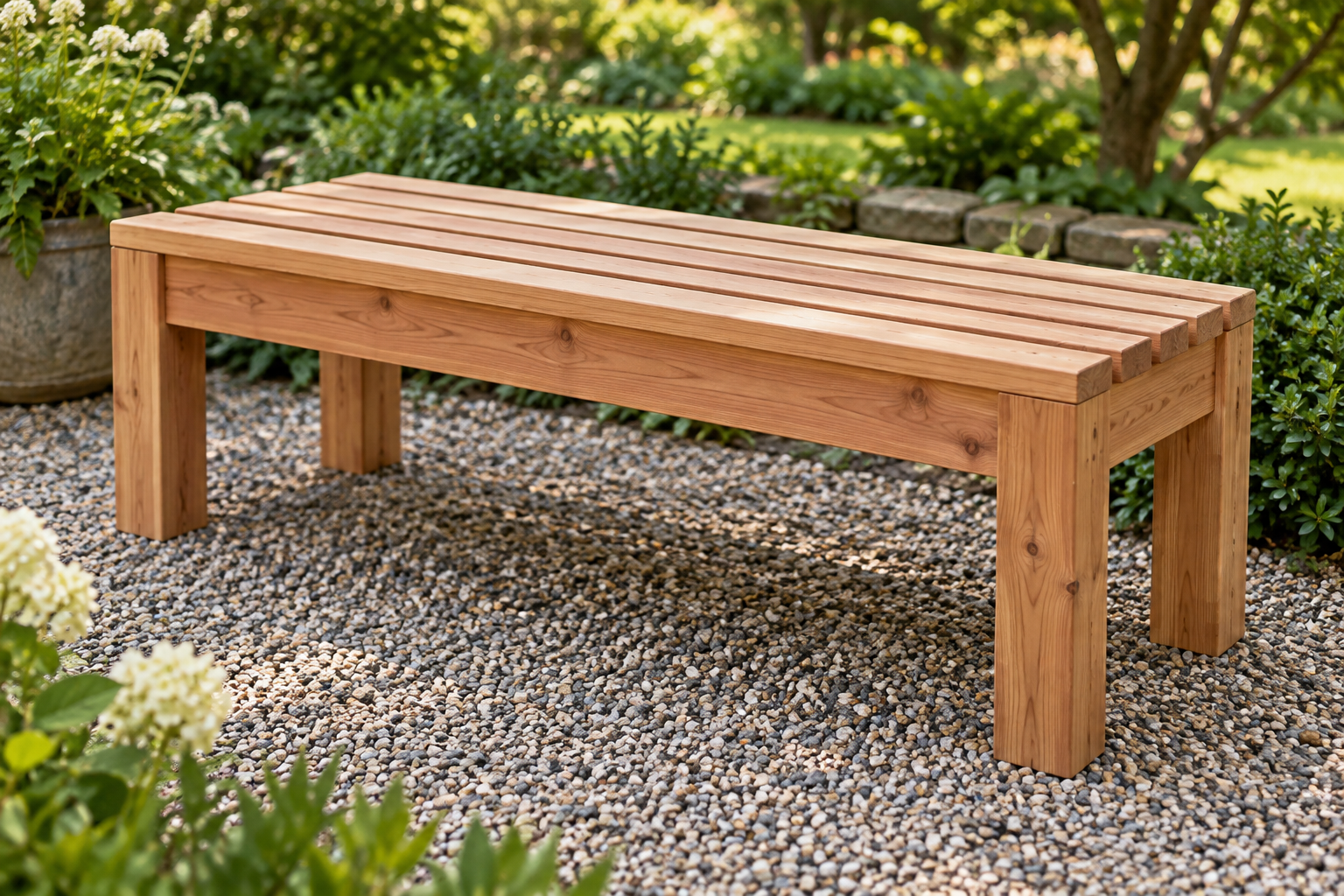
The best outdoor bench plan is one you can build accurately and maintain where it will stand. A covered porch, exposed garden and damp patch of ground present different conditions. Start with the location before deciding on a style.
Compare three practical directions
| Bench type | Work it asks of you | Check before choosing |
|---|---|---|
| Straight slatted bench | Repeated cuts and well-supported seat slats | Complete frame, bracing and fastener details |
| Backed garden bench | Seat/back geometry and more joints | Comfortable dimensions and reliable rear support |
| Joinery-focused hardwood bench | Accurate mortises, tenons or equivalent joints | Tools, dry-fit sequence and appropriate stock |
A simple silhouette is not proof of a simple build. A backrest introduces forces that a low plant platform never experiences.
Read the whole plan first
Check lumber thickness, critical spans, joint drawings and fastener specifications. Locate every component on the cut list. If the instructions leave you guessing how a leg connects or how racking is resisted, choose a more complete plan.
Match the plan to the tools you can operate safely. A hand-tool method may suit a few joints better than building a new powered jig for one project. Conversely, if repeated accurate cuts exceed your current setup, arrange suitable help rather than holding short pieces unsafely.
Plan for water and movement
Keep feet out of persistent standing water and provide the drainage gaps shown in the design. Select suitable lumber and corrosion-resistant fasteners compatible with any treatment. Allow solid wood to move where the construction requires it.
Before assembly, decide which surfaces will become difficult to reach with finish. Follow the chosen system's instructions for preparation and recoating, and do not describe any outdoor finish as permanent protection.
Check the place as well as the bench
Set the completed bench on a stable surface and inspect for rocking, loose connections and racking. Follow the plan's stated use and capacity where provided; do not invent a number from the lumber size alone.
For an accessible seat or a public setting, requirements extend beyond a casual garden project. Choose a design appropriate to that use. For a private garden, keep the plan and make a habit of inspecting joints, feet and finish before each season of use.
Related workshop guides
- Choosing outdoor wood: exposure and maintenance before species
- When to renew an outdoor wood finish: inspect condition, not promises


Comments
Post a Comment